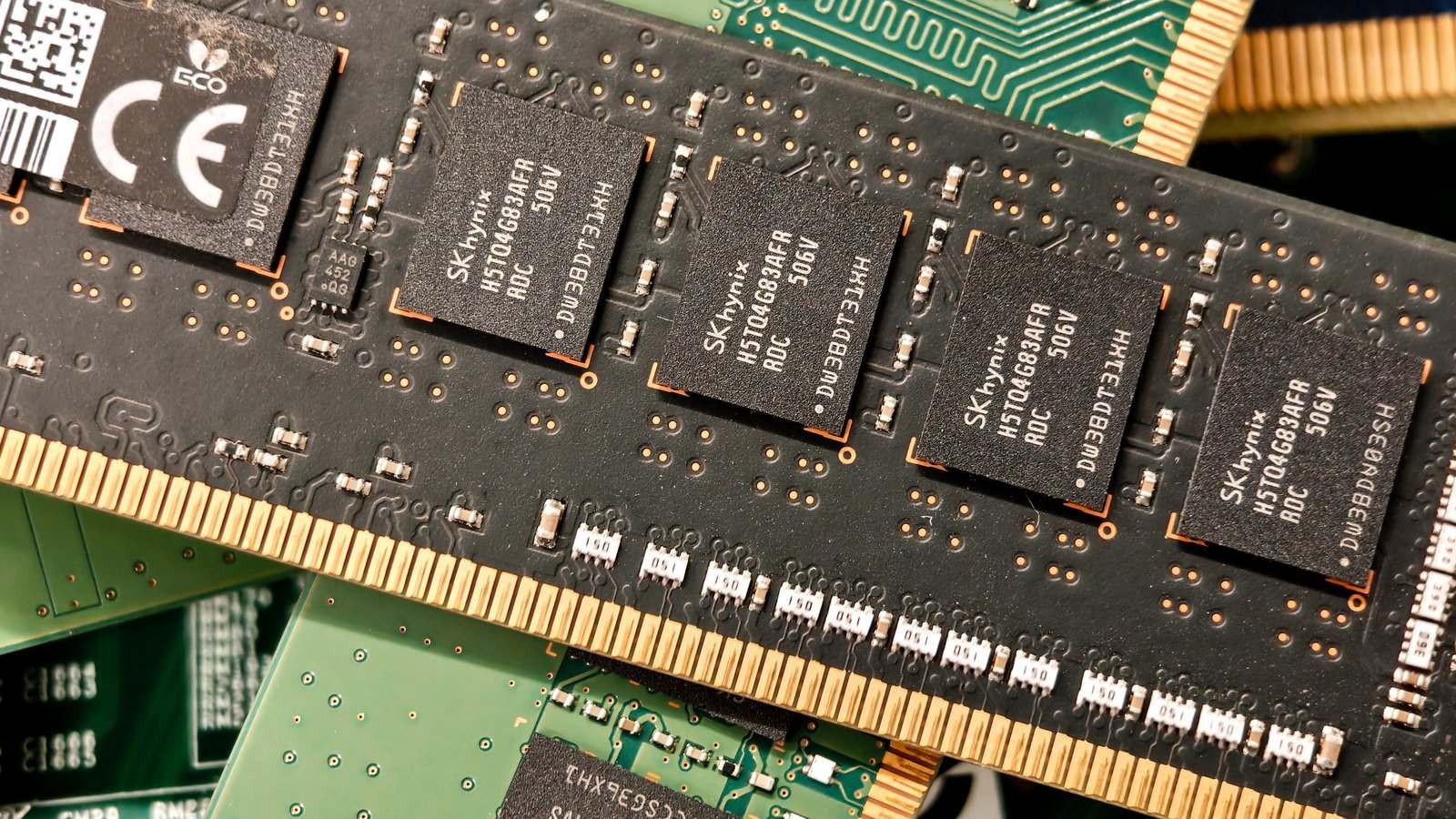
Let me start with the part that made me stop scrolling. Someone in Germany buys a used Ryzen 7 5800X3D, a very good gaming chip, to save a little money. They drop it in, launch Valorant, and get kicked out on the spot. Riot support, they say, told them the processor was already on a block list because its last owner got caught cheating. Honestly, that's the kind of story that makes everybody who has ever bought a used graphics card feel a small cold drip down the neck.
Here's the catch, and it's why I'm writing this instead of just panicking along with the internet. Riot's own anti-cheat chief says he couldn't find that support ticket and calls the buyer's version of events unlikely. So we've got one anonymous post, one very public denial and a lot of people sharing the scary part. I can't tell you who's right about the details. What I can do is sort what's solid from what isn't, show you the math, and give you a way to shop for used parts without losing sleep.
What the buyer says happened
The post went up on r/PCBaumeister, a German PC-building subreddit, and outlets have been quoting a machine translation of it. According to Kotaku, the buyer picked up the Ryzen 7 5800X3D on Kleinanzeigen, a German online classifieds site. Dexerto reports the buyer had owned it only since September 21 and that Valorant ran fine on the previous processor.
The moment Valorant launched, the buyer says, Riot's Vanguard anti-cheat shut them out. Support then allegedly said the CPU's ID was blacklisted after a hardware ban dated August 12, because the previous owner had cheated with it. The buyer went further and claimed support said their motherboard and storage drive were now flagged too, and that nothing could be done.
Notice how many steps there are in that chain, and how every one of them rests on the buyer's own account of a support conversation. I'm not calling anyone a liar. I'm saying that's a lot of weight for one Reddit post to carry.
What Riot says back
Phillip Koskinas, whom Dexerto identifies as Riot's anti-cheat director, answered on X. By Dexerto's account, he said he couldn't find a support ticket matching the buyer's details and called the story "pretty unlikely." He laid out Riot's rules this way: hardware bans last four months at most, they apply only to the game where cheating was caught, and support is supposed to tell a player how long the ban has left. He also flatly denied that Vanguard blacklists the rest of a PC when it spots one banned part.
Notice what he did not say. As far as I can tell from the coverage, he didn't deny that a hardware ban can exist on a processor, or that it could still be active after the processor changes hands. He disputed the spread to other parts, the length and the ticket. That difference matters, and we'll come back to it.
I haven't seen the original Reddit thread myself in English, and I can't verify the support conversation. Everything about it here comes from outlets quoting the post and from Riot's public replies.
The claim check: five claims, scored
This is my own scorecard, and nobody else is going to hand you one. I read each claim against what Riot said publicly and what the outlets reported. The verdicts are my judgment, not Riot's.
- Plausible, not confirmedA hardware ban can follow a CPU to a new owner.
Riot describes hardware bans as real and lasting up to four months, and a ban attached to a part would naturally travel with it. But Riot hasn't confirmed this specific case, and it hasn't explained how Vanguard tells one processor from another. A plain CPU ID only identifies the model, so the company likely uses extra fingerprints, according to EGW.
- Disputed by RiotThe ban also flagged the buyer's motherboard and SSD.
Riot's anti-cheat director denies Vanguard blacklists other parts when it flags one. The only source for the spread is the buyer's description of what support said.
- Disputed by RiotThe ban is permanent.
Some write-ups use the word permanent. Riot says hardware bans max out at four months.
- Riot's stated ruleIt only hits the game where the cheating happened.
That's Riot's position, as reported by Dexerto, XDA Developers and others. So by Riot's account, League of Legends or Teamfight Tactics wouldn't be blocked by a Valorant hardware ban.
- UnprovenRiot support told this buyer all of the above.
Koskinas says he couldn't find a ticket that matches. That doesn't prove the conversation never happened, and nobody outside Riot can check. I'd treat it as an open question.
The date math nobody printed
Take Riot's own numbers and the buyer's own dates, and you get a picture neither side spelled out. Here's my arithmetic. It assumes the August 12 date is accurate and that Riot's four-month cap counts from that date.
- Aug. 12, 2026The date support allegedly gave for the hardware ban.
- Sept. 21, 2026 · 40 days laterThe buyer says they've owned the chip since this day. So the previous owner, if the story is right, sold a flagged part about five and a half weeks after the ban.
- Oct. 6, 2026 · todayRoughly 67 days sit between today and Dec. 12, the latest date a four-month ban from Aug. 12 would run to.
- Around mid-DecemberThe very latest the block would lift, if Riot's cap is right. Dexerto and TalkEsport both land on mid-December.
So even on Riot's tidiest version of the story, an innocent buyer could spend about two more months unable to play Valorant on the PC they just upgraded. It wouldn't last forever, and I'll give Riot credit for that. It would still feel unfair if you were the one holding the chip.
Why Riot plays this rough
Context helps, because Riot isn't hunting buyers of used chips for fun. Vanguard is a kernel-level anti-cheat, meaning it runs deep inside Windows, and Riot has repeatedly promoted it as one of the most aggressive in the industry. In May, a Vanguard update began blocking cheat devices that use direct memory access, or DMA. Riot's anti-cheat account then joked about owners holding a brand-new "$6k paperweight," and the internet erupted over whether Riot was destroying hardware.
Riot answered the next day. By Dexerto's report, the company said Vanguard doesn't damage hardware, that the update enforces a standard platform security protection called IOMMU, and that cheat devices simply stop working in Riot's games while ordinary PCs are unaffected. I think that's a fair distinction. A cheater whose gadget stops working hasn't had their property destroyed.
But look at the pattern. A company that fights cheaters this hard will sometimes land on the wrong side of an innocent person, and in the used-hardware market there's now a new place for that to happen. If you're curious about how fast used and new part prices are moving, our RAM shortage story has the background on why hardware prices keep making headlines.
My take
I want to be fair in both directions, so I'll say two things that pull against each other.
First, I'm skeptical of the scariest version. A ban that spreads to a motherboard and an SSD, with no appeal, would be a huge deal, and Riot says it doesn't work that way. One unverified post isn't enough for me to believe it, and I'd rather wait for more than a single account.
Second, and this is the part I can't shake, the story doesn't have to be true in its worst form to expose a real gap. Even Riot's gentler version means a buyer can be locked out for weeks and there's no official way to look up a part before paying. Cheaters caused the problem, but an honest buyer carries the cost.
So here's what I'd like to see, and to be clear, I haven't seen Riot say it will do any of it. A simple way for a buyer to check a part, or at least a clear, fast route for people who can show they bought something in good faith. Koskinas says support is already supposed to tell players how long a ban has left. Letting a buyer ask the question before the money changes hands feels like a small step to me, and it would make the used market safer for everyone.
I'm optimistic about this one, honestly. The fix is cheap, the damage is limited by the four-month cap, and the best defense is just shopping a little smarter. Let's get into that.
My ladder: safest to riskiest ways to buy used
This ranking is mine. It isn't from Riot or any retailer, and it's built from common sense about paper trails and return options rather than any data. The higher the rung, the easier it is to undo a bad purchase.
- 1New, or refurbished by a retailer, with a return window
Someone else has already handled the part, and you have a receipt and a way back. This costs the most and gives you the most peace of mind.
- 2Used or open-box from a shop that tests and stands behind it
A business with a reputation to protect is less likely to push a problem part. Ask about its return policy before you pay.
- 3Local pickup from a private seller, with proof in hand
Look at the original box, the receipt and the serial number before you hand over cash, and take photos. Meeting in person also gives you a face to hold accountable.
- 4Shipped from a marketplace seller with a long track record
Read the platform's buyer-protection terms yourself, because they differ and I'm not going to guess at them. Pay in a way that lets you dispute a charge.
- 5A brand-new account, no box, no receipt, a price that seems too good
Skip it. Not every seller like this is shady, but if something goes wrong you'll have nothing to point to.
The checklist I'd use before paying
- Ask for proof of purchase and a clear photo of the part, including its markings.
- Ask how long they've had it and why they're selling. A real answer takes ten seconds, and a dodge tells you something.
- Scroll their listings. A seller moving many similar parts is a flipper, which isn't a crime but means the history of any one chip is less certain.
- Pay with something that gives you dispute rights, and save the listing and the chat.
- Photograph the part and its packaging when it arrives, before you install anything.
- Use your return window to test the games you actually play. The buyer in this story only found the block when Valorant launched, which is exactly why a return option matters more than any other item here.
If you already own a flagged chip
This is for the person who bought it and got kicked out. The order matters, and none of it is legal advice.
- Contact Riot Support with the details. Give the part, your purchase date and what the listing said, then ask how much time is left on any hardware ban. Koskinas says support is supposed to answer that, and TalkEsport recommends asking.
- Go back to the seller. A buyer who can show a part blocked their game has a fair case for a return or refund. Be polite first, because it works more often than you'd think.
- Keep every record. Receipts, chats, the listing and any messages from support.
- Don't pass it along. Some Redditors suggested selling the chip to someone else, according to Cybernews. That just hands your problem to a stranger.
- Stay away from spoofing tools. The same thread brought them up. My honest opinion is that using software built to fool an anti-cheat is a fast way to turn a bad week into a worse one.
Meanwhile, by Riot's stated rules, a Valorant hardware ban shouldn't stop you from playing League of Legends or Teamfight Tactics on the same PC.
So, should you still buy used?
These are my opinions, and none of them are certainties about how Vanguard works.
- If you buy from a shop or a seller with a return windowGo ahead.
The worst case is a hassle you can undo. Test your games early.
- If you buy privately and Valorant is your main gameSlow down and verify.
Ask for proof, check the seller's history and save everything. The risk looks small, but I can't call it zero.
- If the seller is anonymous and the price is far under the marketPass.
A discount isn't worth a locked game and no paper trail.
Quick answers
Can a used CPU get you banned in Valorant?
According to one buyer's account, yes. A German player says a used Ryzen 7 5800X3D arrived with a hardware ban from its previous owner. Riot's anti-cheat director called the story unlikely and said he couldn't find a matching support ticket, but he didn't deny that hardware bans exist. Treat it as a real, if unproven, risk.
How long does a Valorant hardware ban last?
Four months at most, according to Riot's anti-cheat director as reported by Dexerto and EGW. If the buyer's August 12 date is right, that points to around mid-December 2026 at the latest.
Does a Valorant hardware ban affect League of Legends or other Riot games?
By Riot's stated rules, no. Hardware bans apply only to the game where cheating was detected, so a Valorant ban shouldn't block League of Legends or Teamfight Tactics.
Does Vanguard ban your motherboard and SSD if one part is flagged?
Riot says no. The buyer claimed support told them other parts were flagged too, and Riot's anti-cheat director denied that Vanguard blacklists the rest of a PC. Only the buyer's account supports the spread, so I'd call it unproven.
Can you check whether a used CPU is hardware banned before you buy it?
Not officially. TalkEsport reports there's no official way to check a part in advance, and Riot hasn't publicly explained how Vanguard ties a ban to a specific processor.
What is a hardware (HWID) ban?
It's a penalty aimed at a machine's components rather than only a player's account, so creating a new account doesn't get around it. Riot uses it for serious cheating, and in Valorant's case it's enforced through Vanguard.
Is it safe to buy a used Ryzen 7 5800X3D or other PC parts for Valorant?
Most used purchases go fine, though I can't put a number on it, and the risk is lower when you buy from a shop or a seller who offers returns. The reported case involved a CPU, and Riot hasn't said which other parts Vanguard can fingerprint, so I'd use the same caution for any used component.
What should I do if my used CPU is hardware banned in Valorant?
Contact Riot Support, ask how long the ban has left, and ask the seller for a return or refund. Keep your receipts and messages, and don't sell the part on to someone else.
Did Riot's Vanguard really brick cheaters' hardware in May?
Riot says no. After joking about a "paperweight," the company said Vanguard doesn't damage hardware and that a security protection called IOMMU stops DMA cheat devices from working in its games. Players who don't use those devices are unaffected, according to Riot.