Here is the sentence that made a lot of people close the tab in disgust: Netflix is remaking the Stanford Prison Experiment. I understand the reaction. I had it myself, for about ten seconds.
Then I did what I try to do whenever something makes me angry before I understand it. I went and read. The original study, the criticism, the producers' interviews, the coverage of the trailer. What I found is messier than the headline, and in a few places more hopeful.
I haven't seen a single episode, and I couldn't find a published review, so this is not a critique. It's a map: what the show is, what the 1971 study really was, what the producers say they changed, and the questions I'm carrying into episode one.
The Key Points
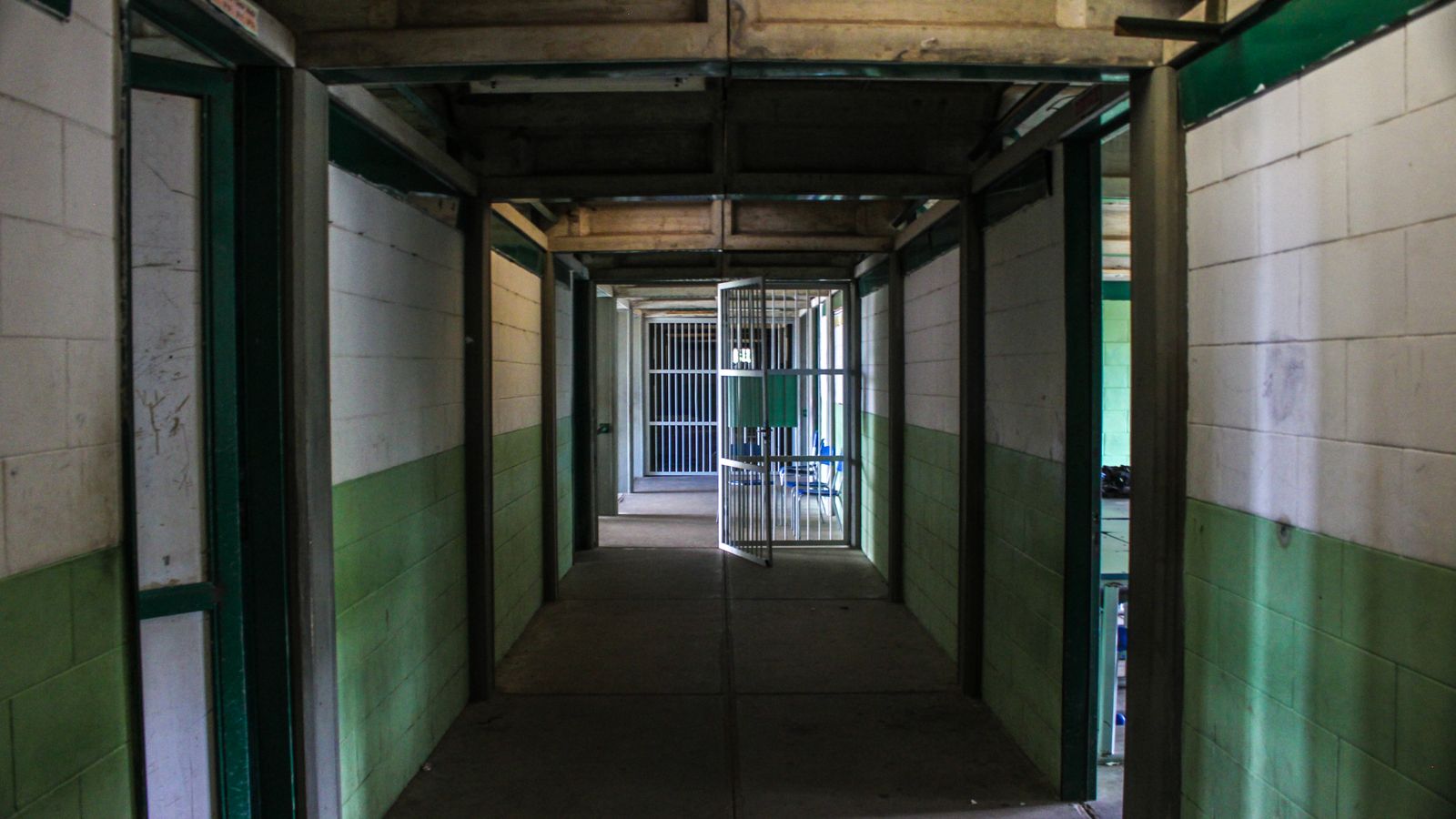
- The series premieres Wednesday, Oct. 21, on Netflix with six episodes. Thirty volunteers, eight guards and 22 prisoners, spend two weeks in a decommissioned section of the Cherokee County Adult Detention Center in Georgia, according to Variety.
- The producers say six participants left because it became too intense, and the safe word was "pineapple." Not all six appear in the final cut.
- My take: it's reality television wearing a lab coat, and the more useful question isn't whether power corrupts. It's who tells ordinary people what the job is.
When does The New Stanford Prison Experiment come out on Netflix, and what is it?
It premieres Wednesday, Oct. 21, 2026, on Netflix, with six episodes in its first season. Netflix lists it as an unscripted series rated TV-MA, and coverage of the trailer puts each episode at about 45 minutes. Netflix's own pitch is simple: 30 people enter a real prison for two weeks, and the shifting power dynamics show what they're capable of.
It comes from Alfred Street Industries, the company of executive producers Jane Lipsitz and Dan Cutforth, whose credits include Top Chef and Project Runway, according to Variety. Netflix's Tudum says the team spent more than a year developing it.
What was the original 1971 Stanford Prison Experiment, and why did it end after six days?
In August 1971, Stanford psychology professor Philip Zimbardo recruited 24 male college students for a study of imprisonment. They were paid $15 a day and randomly assigned to be guards or prisoners in a mock prison in the basement of Jordan Hall, the university's psychology building. The plan was two weeks. It ended after six days, when the treatment of the prisoners escalated alarmingly.
For decades the lesson that came out of that basement was short and chilling: give ordinary people a uniform and they will turn cruel. It became a fixture of psychology classes and the subject of a 2015 film with Billy Crudup as Zimbardo. Zimbardo died in 2024 at 91. Years earlier he told The Independent that research like this could never be done again, according to Newsweek.
Block C · Three RoomsHow is Netflix's version different from the 1971 study and the BBC's 2002 prison study?
Most coverage compares the new show to one old experiment. There were actually two earlier rooms worth knowing, so here are all three side by side, stacked so you never have to scroll sideways.
The row I find most telling is "In charge." In 1971 the lead researcher was inside the story. In 2002 the researchers deliberately stepped back. In 2026 the person who decides what the audience sees is an editor. Nobody in the other two rooms had that job.
Block D · The CriticsWhy do critics say the 1971 study doesn't prove what we were taught?
The ethical objections came early. The bigger shift came later, when French researcher Thibault Le Texier went through Stanford's archive of the study, including recordings, notes and correspondence, and published a French-language book in 2018 and an English paper in 2019 called "Debunking the Stanford Prison Experiment" in American Psychologist. His reading is that the guards were not simply left alone to improvise cruelty. The research team gave them guidance about how to behave, and the setup invited everyone to perform what they thought the experimenters wanted, which psychologists call demand characteristics.
Reicher and Haslam, the British psychologists behind the BBC study, reached for a different conclusion. They report that their participants were reluctant to adopt their assigned roles, and that the leadership Zimbardo provided mattered a great deal in 1971.
One more voice, because it is the most human one. Clay Ramsay, who was Prisoner 416 in the original, told Newsweek the Netflix series is a "bad idea," and said he worries it blurs the line between entertainment and science. When the people who were actually there are uneasy, I think we owe that unease some respect.
Block E · The Making OfWhere was it filmed and what safeguards were used? My safeguard ledger
Per Variety, the production took 30 participants to a decommissioned section of the still-operating Adult Detention Center in Cherokee County, Georgia, and simulated prison life there for two weeks. Netflix's Tudum says the real setting was the point, because a real prison carries a history and a sense of confinement a set can't, and adds that actual inmates were at the facility. Cameras ran around the clock and were remote-controlled, and interviews were arranged so participants couldn't see the interviewer.
The producers describe these safeguards: extensive background checks and psychological testing, informed consent, medics and psychologists on call 24/7, a series of confessional interviews, and a safe word, "pineapple," that let anyone leave or ask to talk to a therapist or producer. Tudum adds that psychologists monitored the experiment continuously.
Instead of repeating the list, I built a ledger of my own. Each row starts with a problem critics raise about 1971, shows what Netflix says it changed, and then says plainly what I can't verify from the outside.
1. The researcher was also the warden
2. Participants weren't properly informed
3. Oversight was thin
4. Only male college students
5. It wasn't a television show
Is The New Stanford Prison Experiment real science or reality TV? My four-question test
The producers call it a reimagining of a study, and plenty of headlines have called it an experiment. I think a word like that deserves a checklist. Here's mine, built from what's been published so far.
- Is there a comparison group?Everything I read describes one group in one building. Without a comparison you can describe what happened, but you can't say what caused it.
- Does the audience see everything?The footage runs around the clock for two weeks, and the finished show is six episodes of about 45 minutes. That's roughly four and a half hours of television, from 14 days of tape.
- Did people know they were being watched?Yes. Netflix's own producers say participants began talking straight to the cameras. That doesn't ruin the human moments, but it's the opposite of a controlled setup.
- Can anyone check the work?It's a Netflix series, not a paper, and I couldn't find an announced study to go with it. Nobody can re-run or audit it the way they can a published experiment.
By my count that's zero out of four as science, and I don't mean it as an insult. It's a category. Nobody at Netflix promised a journal article. Judge it as television that asks a big question, and it can still be worth watching and arguing about.
Block G · The ArgumentWhy I think "does power corrupt?" is the wrong question
Netflix frames the series around whether power inevitably changes us. Even the producers seem less certain than their marketing. One write-up of their Variety interview says Lipsitz suggested "does power corrupt?" may not have been the right question to begin with. I haven't matched that line to Variety's original wording, so treat it as secondhand.
I'd go further. The BBC study and Le Texier's archive work both point in the same direction: people's behavior followed what they were told the job was. If that's right, the sharper question is who writes the role, and what happens to the people who refuse it.
That's why the number I keep returning to isn't how many guards got harsh. It's six. Six of 30 people decided another day inside wasn't worth it. In a show about whether people surrender to the role they're handed, walking away is an answer, and a hopeful one. Add a safe word, and you have something the 1971 basement never offered: a built-in way to say no.
So here is what I'm looking for. A guard who refuses an order. A prisoner who looks after another prisoner. A moment where someone uses the system's own rules to protect somebody. I'm not predicting any of it. I'm saying that's where I think the real information lives.
Block H · The VerdictShould you watch The New Stanford Prison Experiment? My verdict by type of viewer
You know the original study
Watch it with the four questions above in your pocket. You're the viewer best placed to notice what's new and what's just repackaged.
Watch with a pencilYou teach or study psychology
Treat it as a discussion prompt, not as evidence. The ledger above is a ready-made way to ask students what changed and what didn't.
Use as a promptYou want tense reality TV
Trailer coverage describes power struggles and emotional breakdowns, so tension looks likely. Whether it's more than tension is the open question.
Probably grippingWatching people struggle for entertainment is your line
That's a reasonable line, and it's the same one critics have been drawing since the show was announced. Skipping it is a perfectly good call.
Skip without guiltMy Quick Take
Curious, uneasy and a little hopeful, in that order. Curious about a real prison and a real safe word. Uneasy that the edit has the last word. Hopeful because six people walked out and, I suspect, said something true by doing it. I'm not calling it good or bad without having seen it.
The New Stanford Prison Experiment questions, answered fast
When does The New Stanford Prison Experiment come out?
Wednesday, Oct. 21, 2026, on Netflix.
How many episodes are there?
Six, at about 45 minutes each according to coverage of the trailer.
Is The New Stanford Prison Experiment real or scripted?
Netflix calls it an unscripted series, so there's no script. It is a reality show with edited footage, not a published scientific study.
Where was The New Stanford Prison Experiment filmed?
In a decommissioned section of the Adult Detention Center in Cherokee County, Georgia, a working prison, according to Variety.
How many people are in it?
Thirty volunteers: eight guards, split between day and night shifts, and 22 prisoners, per Variety.
What is the safe word?
"Pineapple." The producers say participants could use it to leave or to ask to speak with a therapist or producer.
Did anyone leave early?
The producers say six participants left because it became too intense. Not all of them appear in the finished episodes.
Who are the experts in the show?
Netflix lists Harvard behavioral psychologist Alison Wood Brooks, Pulitzer Prize-winning journalist Trymaine Lee and retired federal corrections professional Michael Cantrell.
How long did the original Stanford Prison Experiment last?
Six days. It was planned to run for two weeks.
Was the original Stanford Prison Experiment fake?
I wouldn't use that word. Critics, including researcher Thibault Le Texier, argue the guards were guided and that demand characteristics shaped the outcome. Zimbardo defended the study. The lesson is contested.
How is it different from the 2015 movie?
The 2015 film The Stanford Prison Experiment is a scripted drama about the 1971 study, with Billy Crudup as Zimbardo. The Netflix series is unscripted and takes place in a real prison.
What is the rating?
TV-MA.